Home /
Expert Answers /
Other /
1-what-are-the-strengths-and-weaknesses-of-singaporeairlines-2-what-are-the-opportunities-and-threat
(Solved): 1. What are the Strengths and Weaknesses of Singaporeairlines?2. What are the Opportunities and Thre ...
1. What are the Strengths and Weaknesses of Singaporeairlines?
2. What are the Opportunities and Threats that Singaporeairlines must look into?
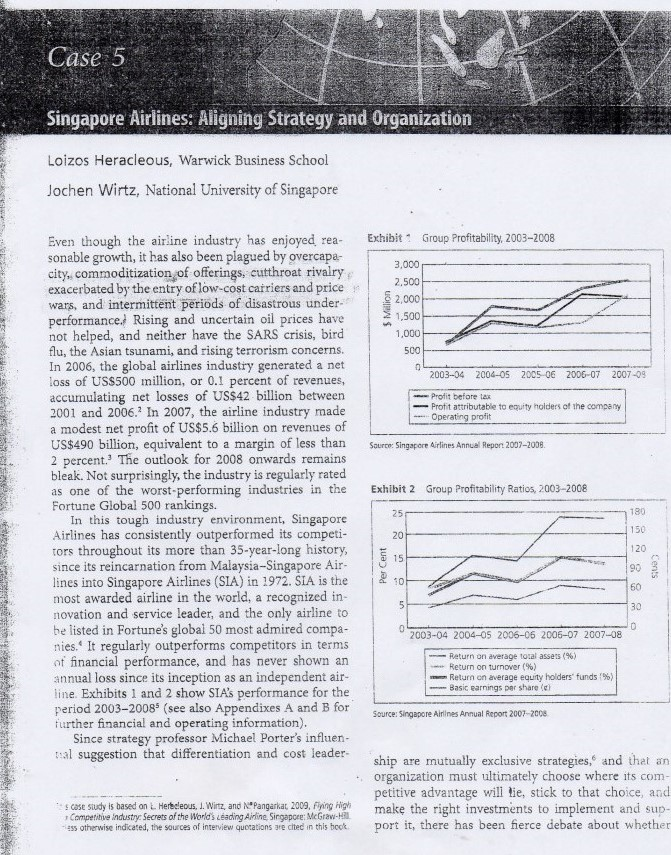
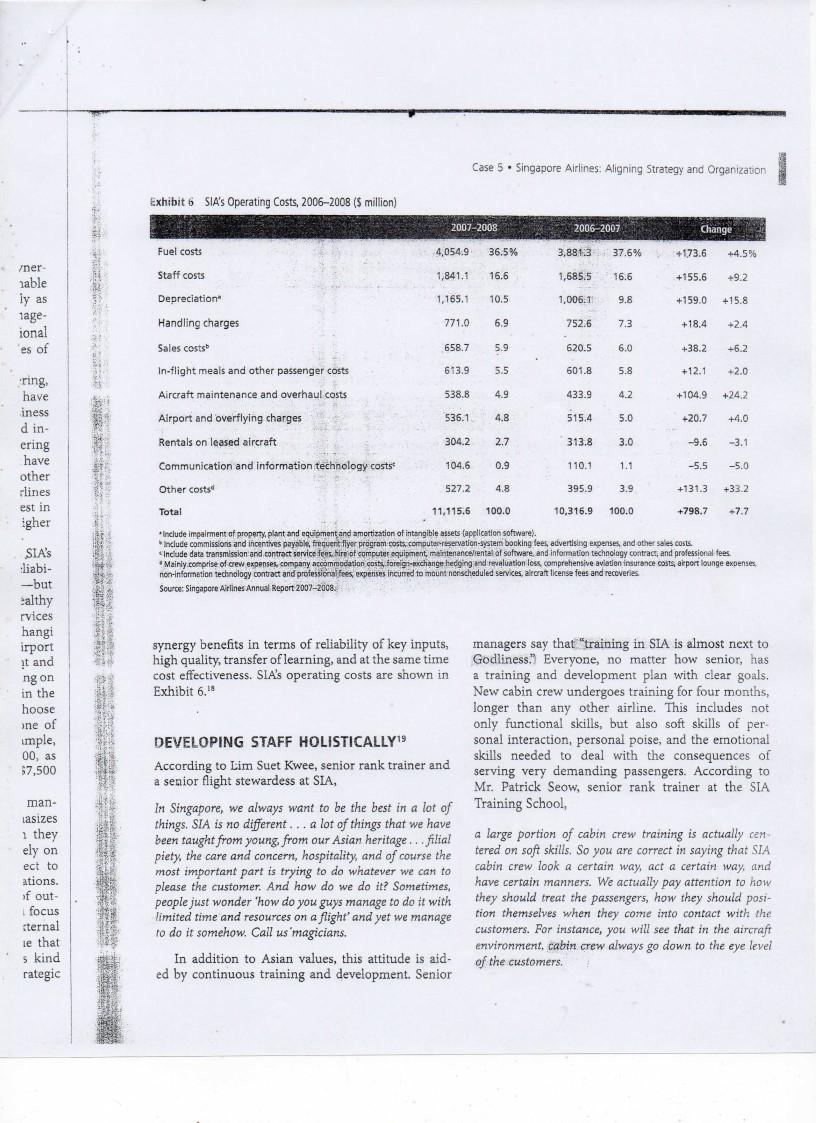
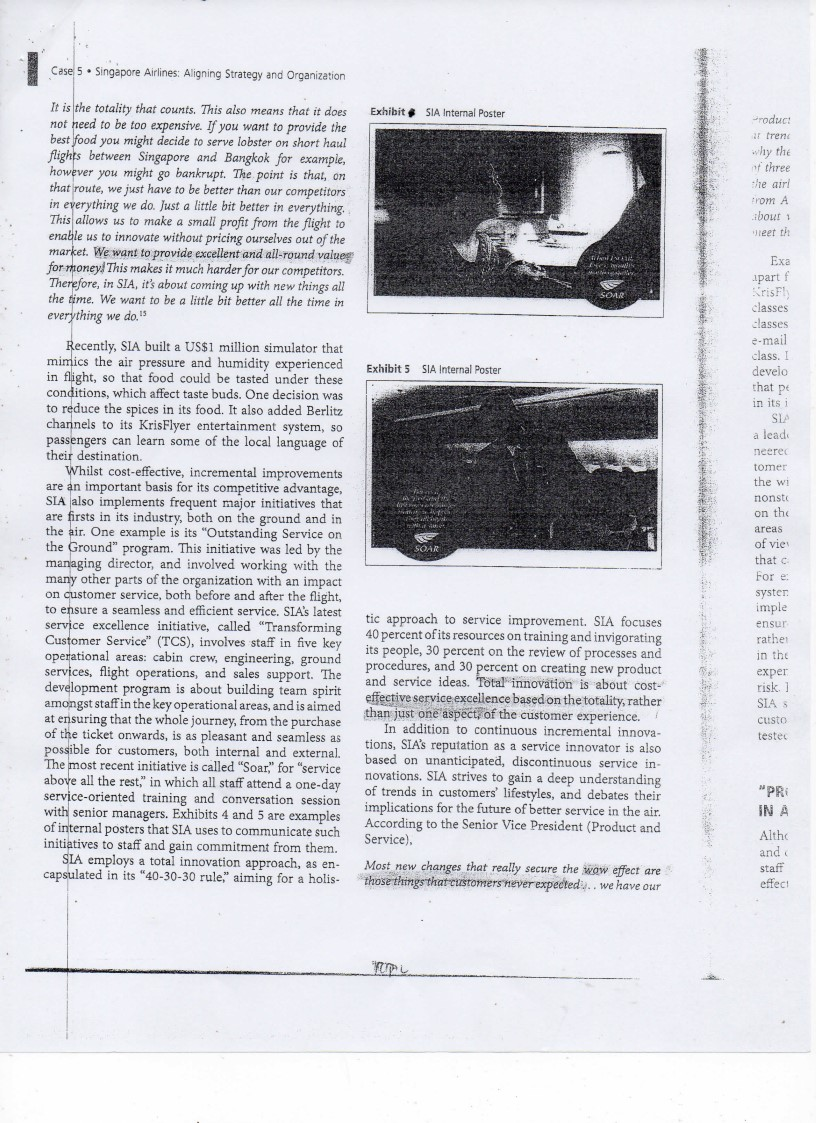
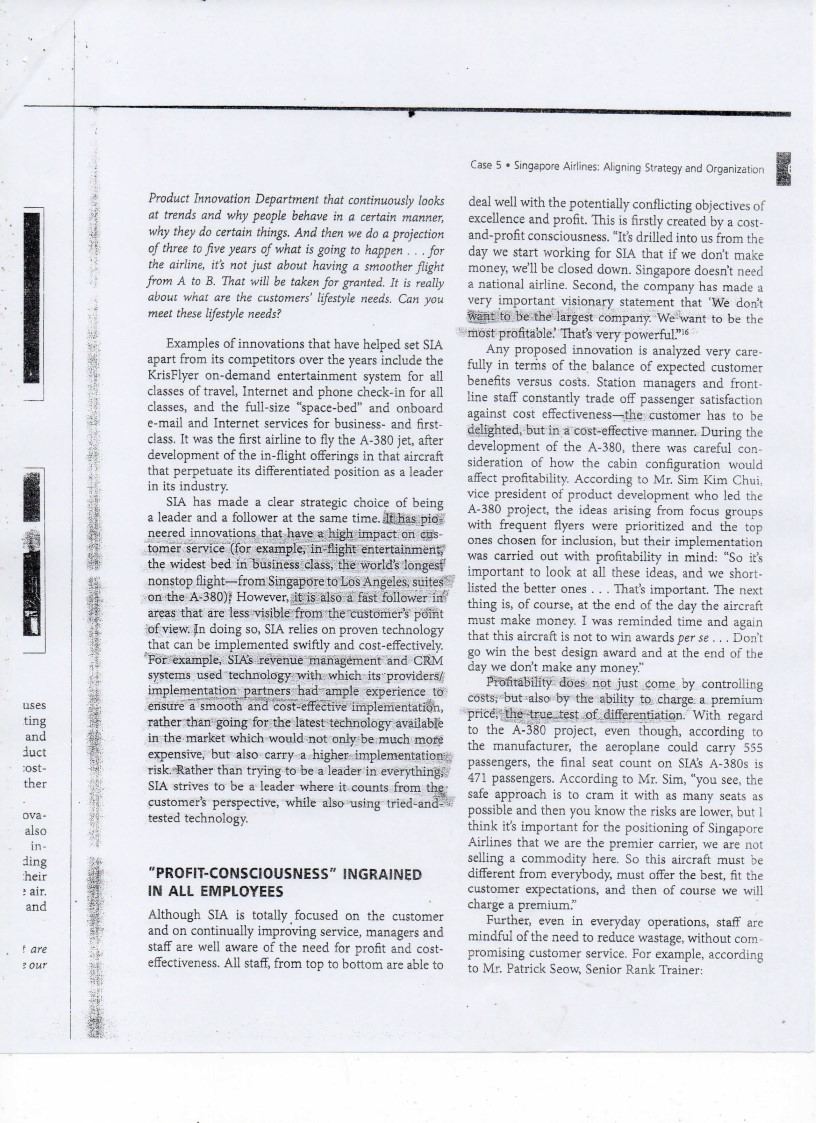
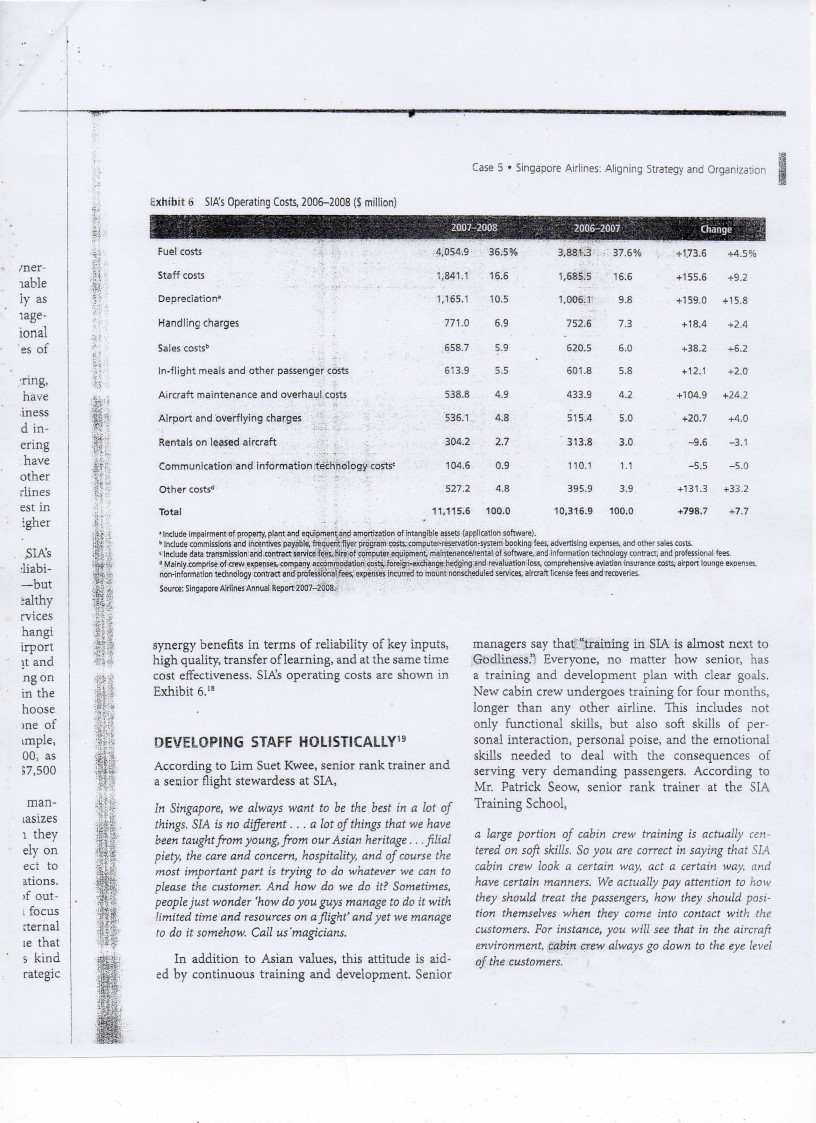
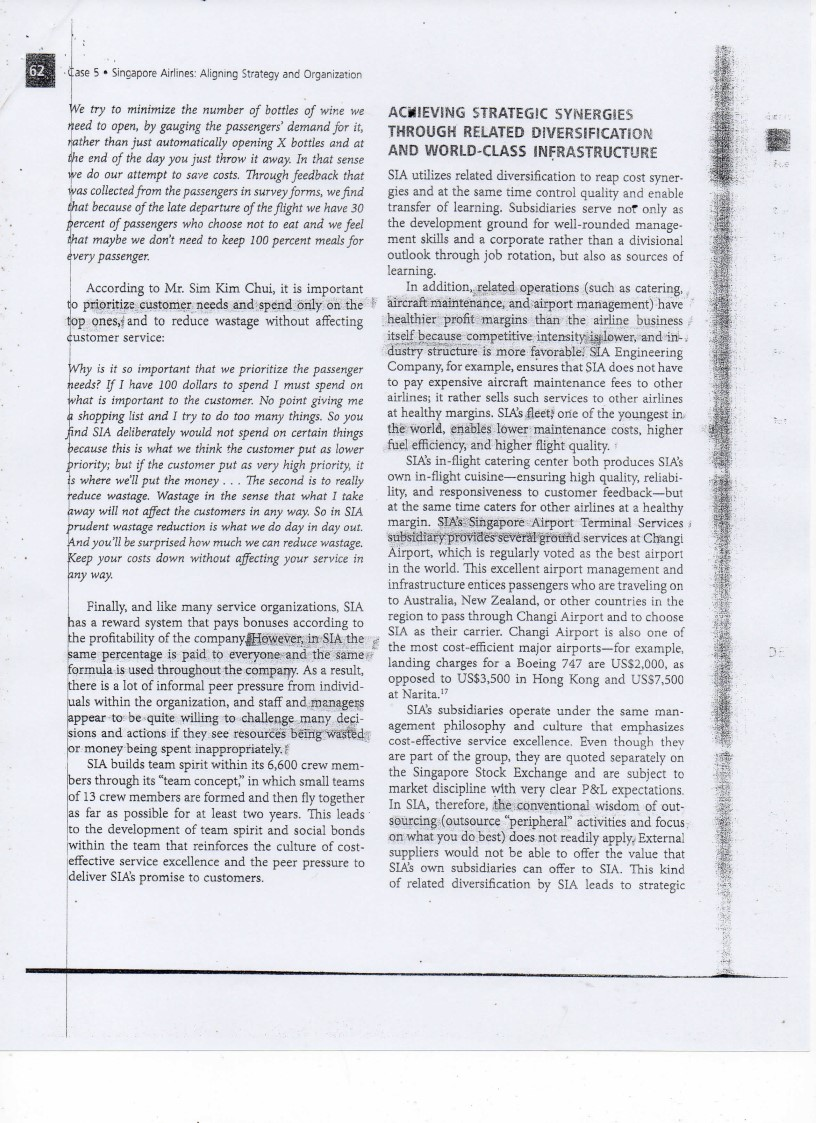
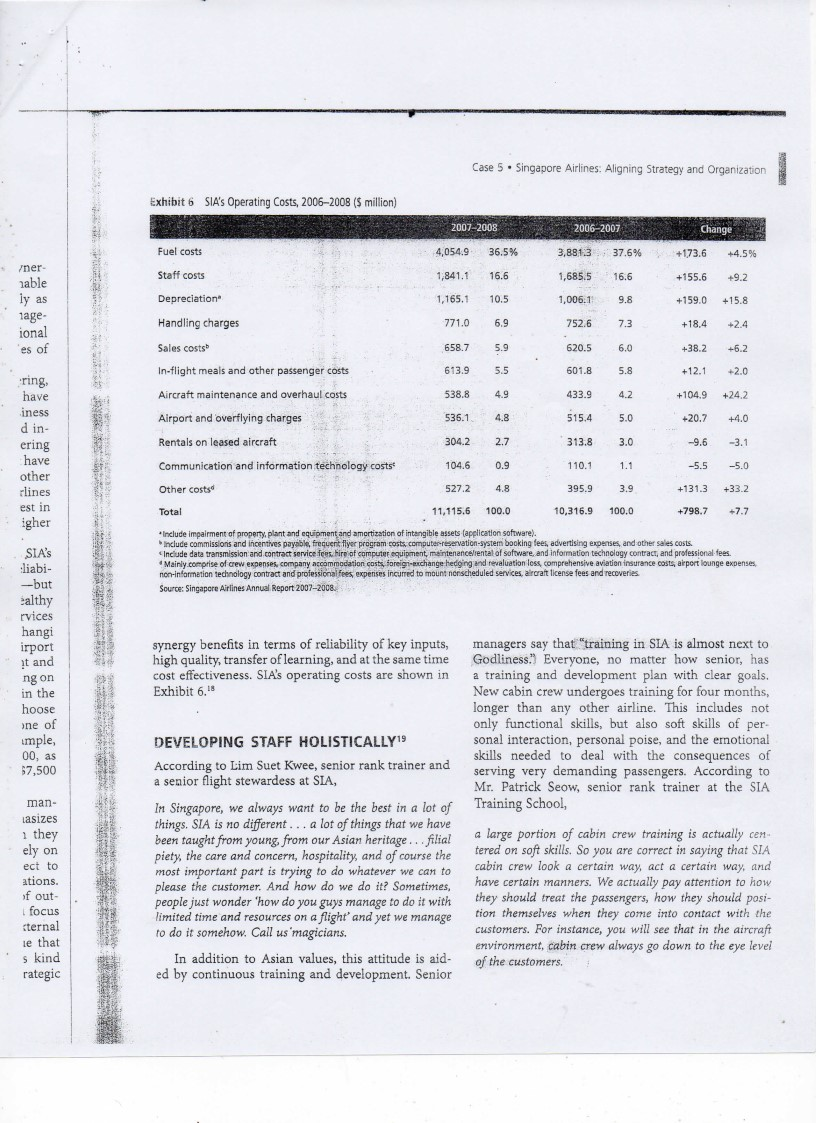
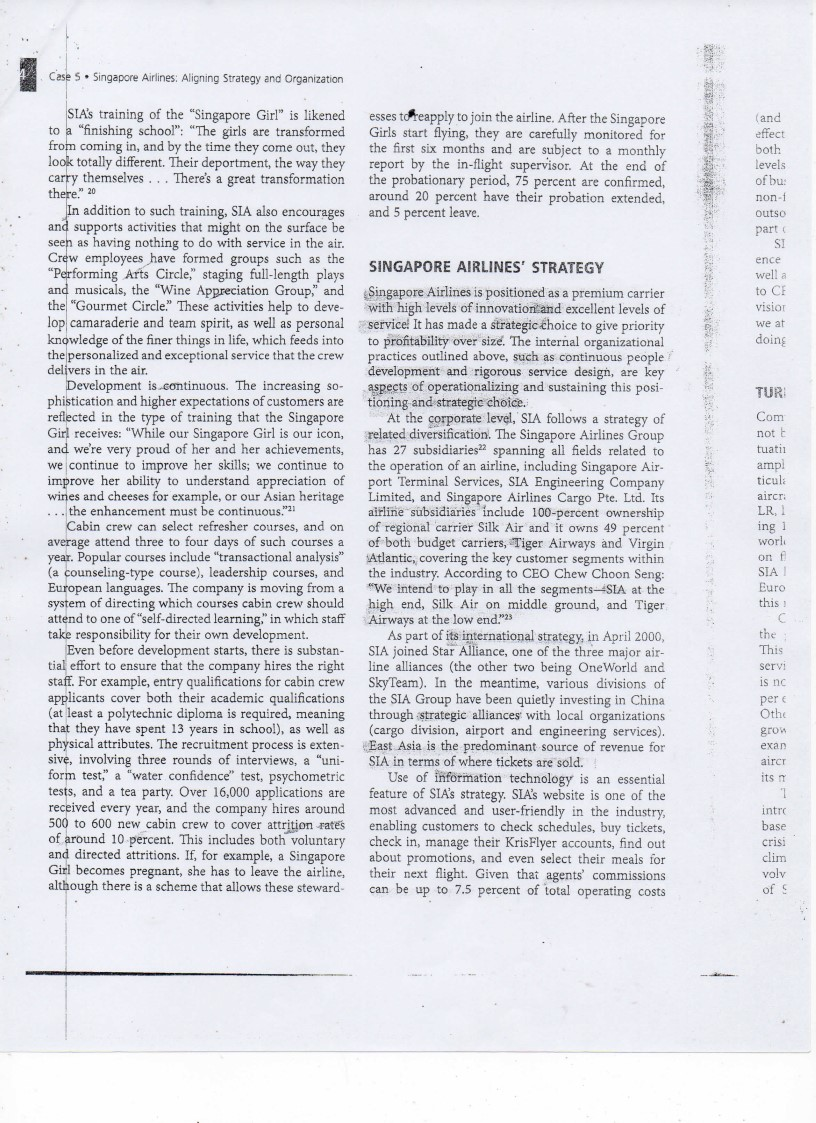
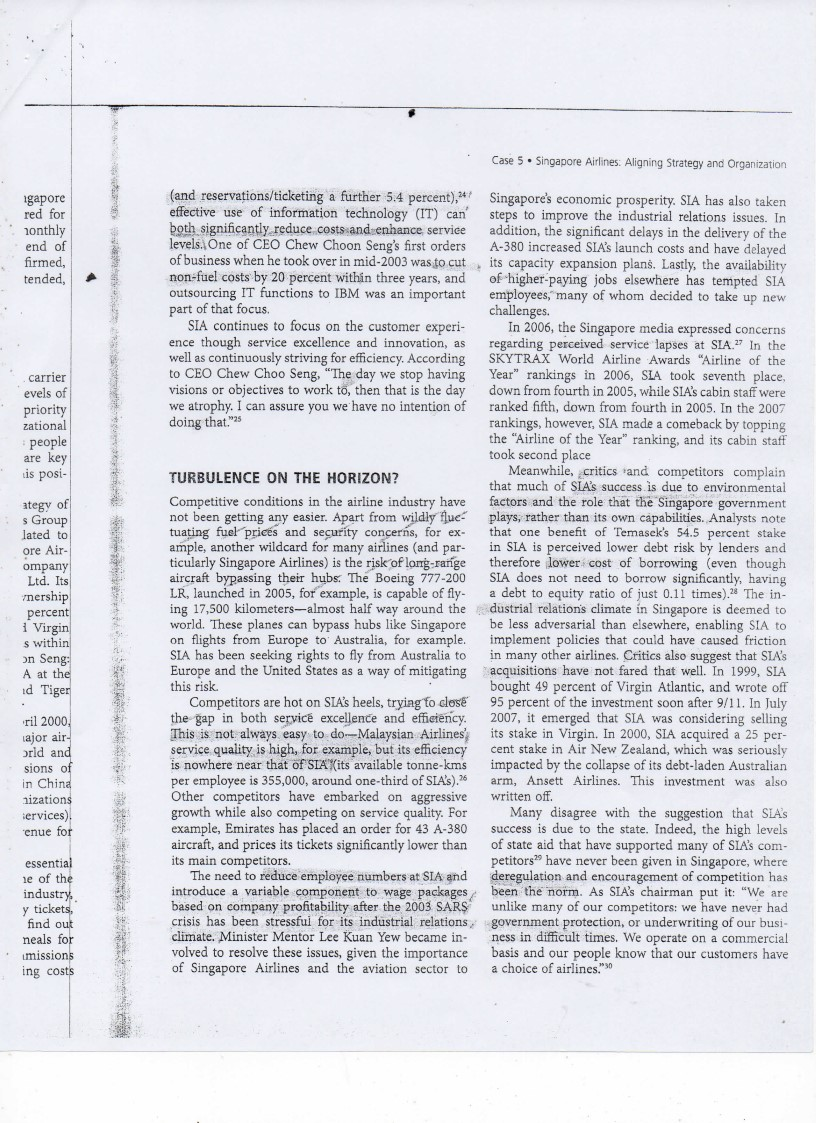
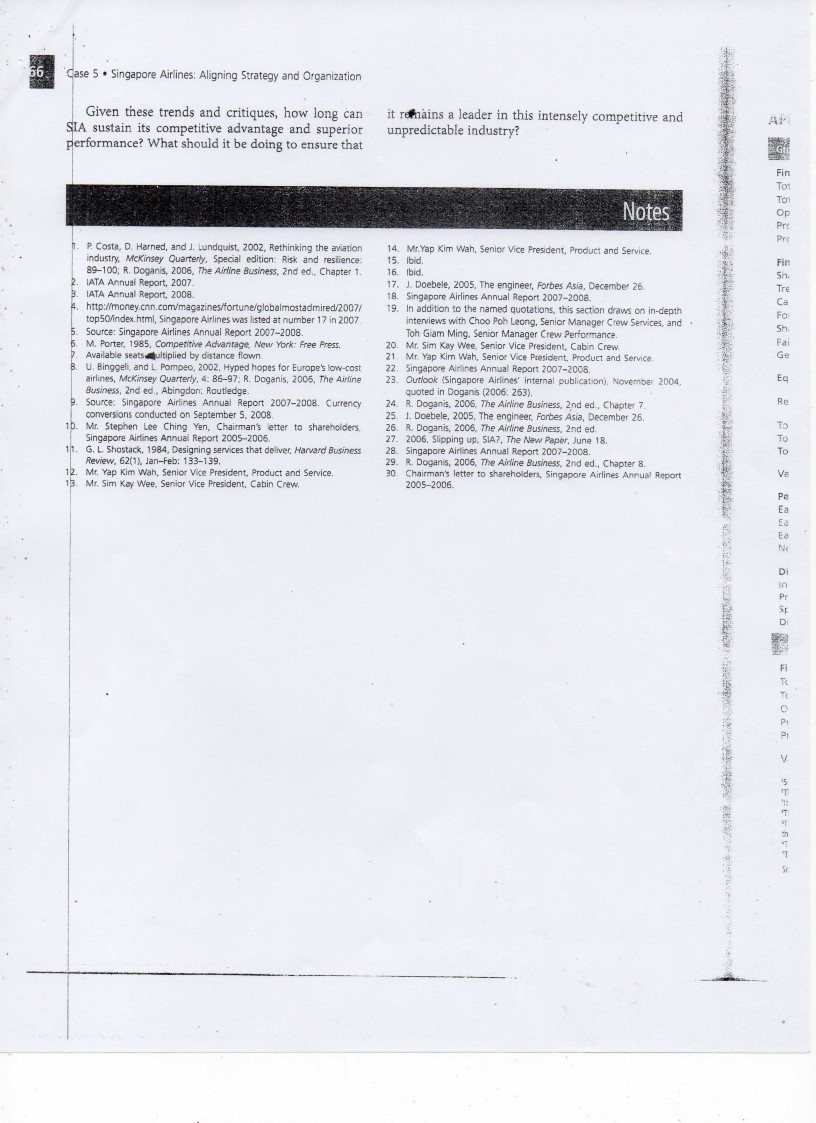
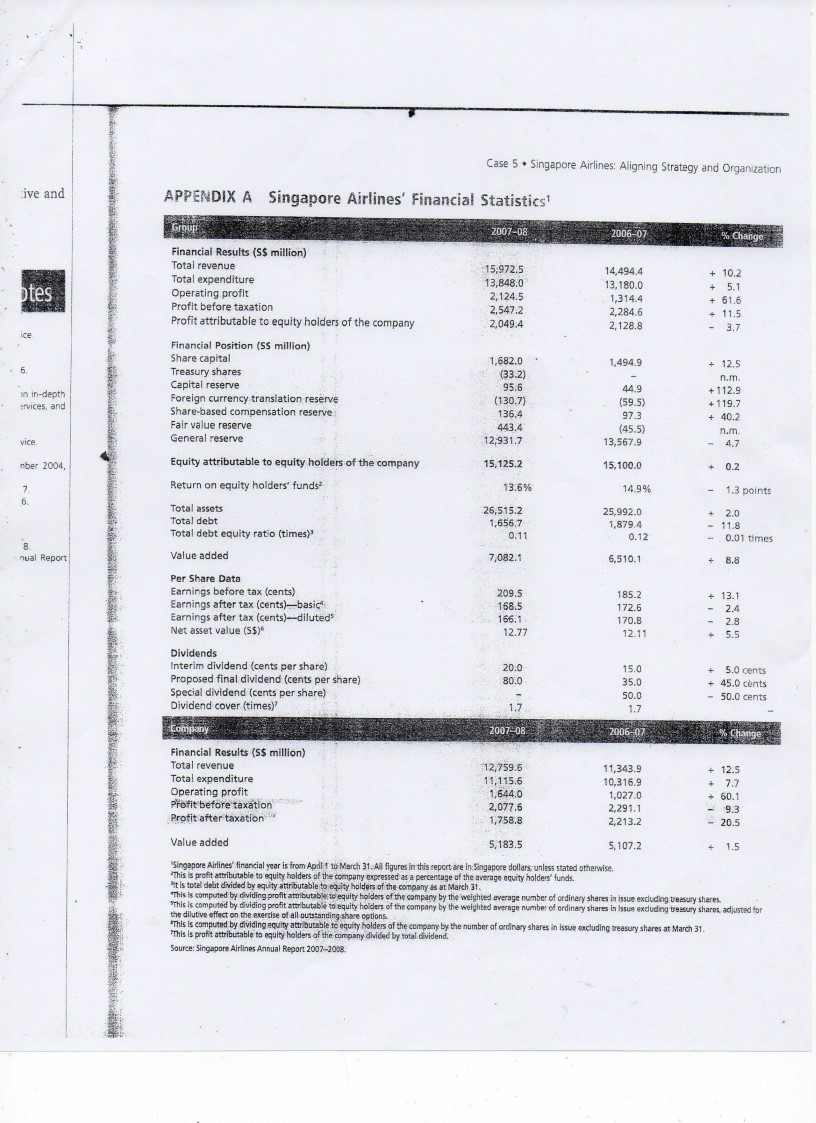
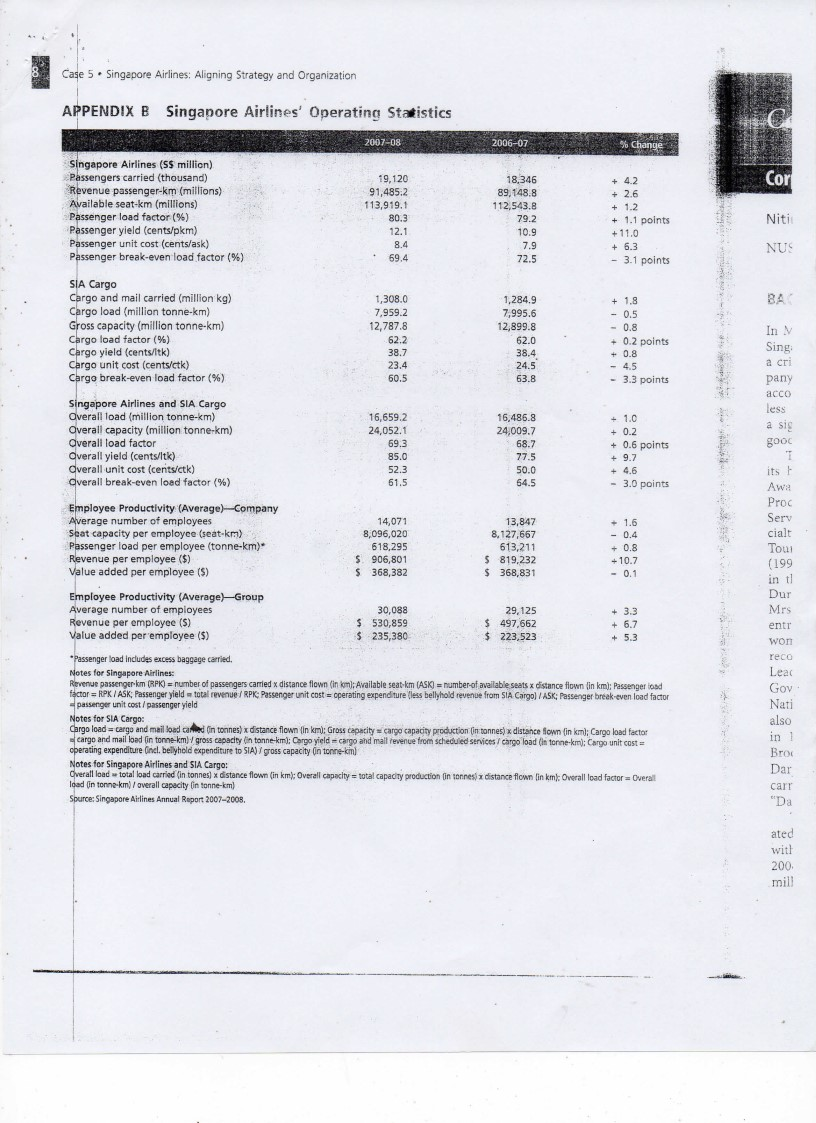
Case 5 Singapore Airlines: Aligning Strategy and Organization Loizos Heracleous, Warwick Business School Jochen Wirtz, National University of Singapore Exhibit? Group Profitability, 2003-2008 $ Million 3,000 2.500 2,000 1,500 1,000 500 0 2003-04 2004-05 2005-06 2006-07 2007-09 Profit before tax Profit attributable to equity holders of the company Operating profit Source: Singapore Airlines Annual Report 2007-2008 Exhibit 2 Group Profitability Ratios, 2003-2008 Even though the airline industry has enjoyed rea- sonable growth, it has also been plagued by overcapa- city, commoditization of offerings, cutthroat rivalry exacerbated by the entry of low-cost carriers and price wars, and intermittent periods of disastrous under performance. Rising and uncertain oil prices have not helped, and neither have the SARS crisis, bird flu, the Asian tsunami, and rising terrorism concerns. In 2006, the global airlines industry generated a net loss of US$500 million, or 0.1 percent of revenues, accumulating net losses of US$42 billion between 2001 and 2006. In 2007, the airline industry made a modest net profit of US$5.6 billion on revenues of US$490 billion, equivalent to a margin of less than 2 percent. The outlook for 2008 onwards remains bleak. Not surprisingly, the industry is regularly rated as one of the worst-performing industries in the Fortune Global 500 rankings. In this tough industry environment, Singapore Airlines has consistently outperformed its competi- tors throughout its more than 35-year-long history, since its reincarnation from Malaysia-Singapore Air- lines into Singapore Airlines (SIA) in 1972. SIA is the most awarded airline in the world, a recognized in novation and service leader, and the only airline to be listed in Fortune's global 50 most admired compa- nies. It regularly outperforms competitors in terms of financial performance, and has never shown an annual loss since its inception as an independent air- line Exhibits 1 and 2 show SIA's performance for the period 2003-20085 (see also Appendixes A and B for Further financial and operating information). Since strategy professor Michael Porter's influen- tal suggestion that differentiation and cost leader- 25 180 150 20 120 Per Cent 90 Cents 10 60 5 30 0 0 2003-04 2004-05 2006-06 2006-07 2007-08 Return on average total assets (%) Return on turnover (%) Return on average equity holders' funds%) Basic earnings per shared Source: Singapore Airlines Annual Report 2007-2008 ship are mutually exclusive strategies, and that an organization must ultimately choose where its com- petitive advantage will tie, stick to that choice, and make the right investments to implement and sup- port it, there has been fierce debate about whether s case study is based on L. Herbeleous, I. Wirtz, and Pangarkat 2009, fining High Competitive industry: Secrets of the World's Leading Airline Singapore: McGraw-HR - 25 otherwise indicated, the sources of interview quotations are cited in this book Case 5. Singapore Airlines: Aligning Strategy and Organization Exhibit 6 SIA's Operating costs, 2006-2008 ($ million) 2007-2008 2006-2007 Change Fuel costs 4,054.9 36.5% 3,88113 37.6% +173.6 +4.5% Staff costs 1,841.1 16.6 1,685.5 16.6 +155.6 +9.2 Depreciation 1,165.1 10.5 1,006.1 9.8 +159.0 +15.8 ner- nable ly as iage- ional es of 771.0 6.9 752.6 7.3 +18.4 +2.4 658.7 5.9 620.5 6.0 +38.2 +6.2 Handling charges Sales costs In-flight meals and other passenger costs Aircraft maintenance and overhaul costs 613.9 5.5 601.8 5.8 +12.1 +2.0 538.8 4.9 433.9 4.2 +104.9 +24.2 Airport and overflying charges 536.1 4.8 515.4 5.0 +20.7 +4.0 ring, have iness d in ering have other clines 304.2 2.7 313.8 3.0 -9.6 -3.1 Rentals on leased aircraft Communication and information technology costs 104.6 0.9 110.1 1.1 -5.5 -5.0 Other costs 527.2 4.8 395.9 3.9 +131.3 +33.2 est in Total 11,115.6 100.0 10,316.9 100.0 +798.7 +7.7 igher Include impairment of property, plant and equipment and amortization of intangible assets application software) include commissions and incentives payable, frequent flyer program costs. computer-reservation system booking fees, advertising expenses, and other sales costs. Include data transmission and contract service for hire of computer equipment, maintenancel rental of software and information technology contract, and professional fees. Mainly.comprise of crew expenses, company acc?mmodation costs, foreign exchange hedging and evaluation less comprehensive aviation insurance costs, airport lounge expenses non-information technology contract and professional fees, expenses incurred to mount nonscheduled services, alrcraft license fees and recoveries Source: Singapore Airlines Annual Report 2007-2008 SIA's liabi- -- but althy rvices hangi irport it and ng on in the hoose one of imple, 00, as 67,500 man- asizes 1 they ely on ect to ations. of out- focus ternal le that s kind rategic synergy benefits in terms of reliability of key inputs, managers say that "training in SA is almost next to high quality, transfer of learning, and at the same time Godliness.!! Everyone, no matter how senior, has cost effectiveness. SIA's operating costs are shown in a training and development plan with clear goals. Exhibit 6.8 New cabin crew undergoes training for four months, longer than any other airline. This includes not only functional skills, but also soft skills of per- DEVELOPING STAFF HOLISTICALLY19 sonal interaction, personal poise, and the emotional skills needed to deal with the consequences of According to Lim Suet Kwee, senior rank trainer and a senior flight stewardess at SIA, serving very demanding passengers. According to Mr. Patrick Seow, senior rank trainer at the SIA In Singapore, we always want to be the best in a lot of Training School, things. SIA is no different... a lot of things that we have been taught from young, from our Asian heritage.. filial a large portion of cabin crew training is actually cen. piety, the care and concern, hospitality, and of course the tered on soft skills. So you are correct in saying that SIA most important part is trying to do whatever we can to cabin crew look a certain way, act a certain way, and please the customer. And how do we do it? Sometimes, have certain manners. We actually pay attention to how people just wonder how do you guys manage to do it with they should treat the passengers, how they should posi- limited time and resources on a flight' and yet we manage tion themselves when they come into contact with the to do it somehow. Call us magicians. customers. For instance, you will see that in the aircraft environment, cabin crew always go down to the eye level In addition to Asian values, this attitude is aid of the customers ed by continuous training and development. Senior Case 5. Singapore Airlines: Aligning Strategy and Organization Product Innovation Department that continuously looks deal well with the potentially conflicting objectives of at trends and why people behave in a certain manner, excellence and profit. This is firstly created by a cost- why they do certain things. And then we do a projection and-profit consciousness. "It's drilled into us from the of three to five years of what is going to happen... for day we start working for SIA that if we don't make the airline, it's not just about having a smoother flight money, we'll be closed down. Singapore doesn't need from A to B. That will be taken for granted. It is really a national airline. Second, the company has made a about what are the customers' lifestyle needs. Can you very important visionary statement that "We don't meet these lifestyle needs? want to be the largest company. We want to be the most profitable? That's very powerful." Examples of innovations that have helped set SIA apart from its competitors over the years include the Any proposed innovation is analyzed very care- fully in terms of the balance of expected customer KrisFlyer on-demand entertainment system for all benefits versus costs. Station managers and front- classes of travel, Internet and phone check-in for all line staff classes, and the full-size "space-bed" and onboard constantly trade off rade off passenger satisfaction e-mail and Internet services for business- and first- against cost effectiveness--the customer has to be delighted, but in a cost-effective manner. During the class. It was the first airline to fly the A-380 jet, after development of the in-flight offerings in that aircraft development of the A-380, there was careful con- sideration how the cabin configuration would that perpetuate its differentiated position as a leader affect profitability. According to Mr. Sim Kim Chui, in its industry. SIA has made a clear strategic choice of being vice president of product development who led the A-380 project, the ideas arising from focus groups a leader and a follower at the same time. It has pios neered with frequent flyers were prioritized and the top innovations that have a high impact on cas tomer service (for example, in-flight entertainment ones chosen for inclusion, but their implementation the widest bed in business class, the world's longest was carried out with profitability in mind: "So it's nonstop flight–from Singapore to Los Angeles, suites listed the better ones ... That's important. The next to look at all these ideas, and we short- on the A-380); However, it is also a fast follower in is, of course, at the end of the day the aircraft areas that are less visible from the customer's of view. In doing so, SIA relies must make money. I was reminded time and again on proven that can be implemented swiftly and cost-effectively. that this aircraft is not to win awards per se... Don't For example, SIAs revenue management and CRM go win the best design award and at the end of the day we don't make any money" Profitability does not just come by controlling implementation partners had rather than going for the latest templementation de ample experience to costs; " but also by the ability to charge a premium price, the true test of differentiation. With regard in the market which would not only be much more to the A-380 project, even though, according to the manufacturer, the aeroplane could carry 555 expensive, but also carry a higher implementation passengers, the final seat count on SA's A-380s is risk. Rather than trying to be a leader in everything SIA strives to be a leader where it counts from the 471 passengers. According to Mr. Sim, “you see, the customer's perspective, while also using tried-and safe approach is to cram it with as many seats as tested technology possible and then you know the risks are lower, but I important for the positioning of Singapore Airlines that we are the premier carrier, we are not selling a commodity here. So this aircraft must be "PROFIT-CONSCIOUSNESS" INGRAINE different from ever must offer the best, IN ALL EMPLOYEES customer expectations, and then of course we will charge a premium." Although SIA is totally focused on the customer Further, even in everyday operations, staff are and on continually improving service, managers and mindful of the need to reduce wastage, without com staff are well aware of the need for profit and cost promising customer service. For example, according effectiveness. All staff, from top to bottom are able to to Mr. Patrick Seow, Senior Rank Trainer: tech US systems used with which its its providers 10 5 uses ting and duct Post ther think it's ova. also in ding heir air and the tare 2 our Case 5. Singapore Airlines: Aligning Strategy and Organization Exhibit 6 SIA's Operating costs, 2006-2008 ($ million) 2007-2008 2006-2007 Change Fuel costs 4,054.9 36.5% 3,88113 37.6% +173.6 +4.5% Staff costs 1,841.1 16.6 1,685.5 16.6 +155.6 +9.2 Depreciation 1,165.1 10.5 1,006.1 9.8 +159.0 +15.8 ner- nable ly as iage- ional es of 771.0 6.9 752.6 7.3 +18.4 +2.4 658.7 5.9 620.5 6.0 +38.2 +6.2 Handling charges Sales costs In-flight meals and other passenger costs Aircraft maintenance and overhaul costs 613.9 5.5 601.8 5.8 +12.1 +2.0 538.8 4.9 433.9 4.2 +104.9 +24.2 Airport and overflying charges 536.1 4.8 515.4 5.0 +20.7 +4.0 ring, have iness d in ering have other clines 304.2 2.7 313.8 3.0 -9.6 -3.1 Rentals on leased aircraft Communication and information technology costs 104.6 0.9 110.1 1.1 -5.5 -5.0 Other costs 527.2 4.8 395.9 3.9 +131.3 +33.2 est in Total 11,115.6 100.0 10,316.9 100.0 +798.7 +7.7 igher Include impairment of property, plant and equipment and amortization of intangible assets application software) include commissions and incentives payable, frequent flyer program costs. computer-reservation system booking fees, advertising expenses, and other sales costs. Include data transmission and contract service for hire of computer equipment, maintenancel rental of software and information technology contract, and professional fees. Mainly.comprise of crew expenses, company acc?mmodation costs, foreign exchange hedging and evaluation less comprehensive aviation insurance costs, airport lounge expenses non-information technology contract and professional fees, expenses incurred to mount nonscheduled services, alrcraft license fees and recoveries Source: Singapore Airlines Annual Report 2007-2008 SIA's liabi- -- but althy rvices hangi irport it and ng on in the hoose one of imple, 00, as 67,500 man- asizes 1 they ely on ect to ations. of out- focus ternal le that s kind rategic synergy benefits in terms of reliability of key inputs, managers say that "training in SA is almost next to high quality, transfer of learning, and at the same time Godliness.!! Everyone, no matter how senior, has cost effectiveness. SIA's operating costs are shown in a training and development plan with clear goals. Exhibit 6.8 New cabin crew undergoes training for four months, longer than any other airline. This includes not only functional skills, but also soft skills of per- DEVELOPING STAFF HOLISTICALLY19 sonal interaction, personal poise, and the emotional skills needed to deal with the consequences of According to Lim Suet Kwee, senior rank trainer and a senior flight stewardess at SIA, serving very demanding passengers. According to Mr. Patrick Seow, senior rank trainer at the SIA In Singapore, we always want to be the best in a lot of Training School, things. SIA is no different... a lot of things that we have been taught from young, from our Asian heritage.. filial a large portion of cabin crew training is actually cen. piety, the care and concern, hospitality, and of course the tered on soft skills. So you are correct in saying that SIA most important part is trying to do whatever we can to cabin crew look a certain way, act a certain way, and please the customer. And how do we do it? Sometimes, have certain manners. We actually pay attention to how people just wonder how do you guys manage to do it with they should treat the passengers, how they should posi- limited time and resources on a flight' and yet we manage tion themselves when they come into contact with the to do it somehow. Call us magicians. customers. For instance, you will see that in the aircraft environment, cabin crew always go down to the eye level In addition to Asian values, this attitude is aid of the customers ed by continuous training and development. Senior 62 Case 5. Singapore Airlines: Aligning Strategy and Organization learning, priority: bi We try to minimize the number of bottles of wine we ACHIEVING STRATEGIC SYNERGIES need to open, by gauging the passengers' demand for it, THROUGH RELATED DIVERSIFICATION rather than just automatically opening X bottles and at AND WORLD-CLASS INFRASTRUCTURE the end of the day you just throw it away. In that sense we do our attempt to save costs. Through feedback that SIA utilizes related diversification to reap cost syner- was collected from the passengers in survey forms, we find gies and at the same time control quality and enable that because of the late departure of the flight we have 30 transfer of learning. Subsidiaries serve not only as percent of passengers who choose not to eat and we feel the development ground for well-rounded manage- that maybe we don't need to keep 100 percent meals for ment skills and a corporate rather than a divisional every passenger outlook through job rotation, but also as sources of According to Mr. Sim Kim Chui, it is important In addition, related operations (such as catering, to prioritize customer needs and spend only on the aircraft maintenance, and airport management) have top ones, and to reduce wastage without affecting healthier profit margins than the airline business customer service: itself because competitive intensity is lower, and in- dustry structure is more favorable: SIA Engineering Why is it so important that we prioritize the passenger Company, for example, ensures that SIA does not have needs? If I have 100 dollars to spend I must spend on to pay expensive aircraft maintenance fees to other what is important to the customer. No point giving me airlines; it rather sells such services to other airlines 4 shopping list and I try to do too many things. So you at healthy margins. SIA's fleet; one of the youngest in find SIA deliberately would not spend on certain things the world, enables lower maintenance costs, higher because this is what we think the customer put as lower fuel efficiency, and higher flight quality. but if the customer put as very high priority, it SIA's in-flight catering center both produces SIA's is where we'l put the money ... The second is to really own in-flight cuisine-ensuring high quality, reliabi- reduce wastage. Wastage in the sense that what I take lity, and responsiveness to customer feedback--but away will not affect the customers in any way. So in SIA at the same time caters for other airlines at a healthy prudent wastage reduction is what we do day in day s Singapore Airport Terminal Services And you'll be surprised how much we can reduce wastage. subsidiary provides several ground services at Changi Keep your costs down without affecting your service in Airport, which is regularly voted as the best airp in the world. This excellent airport management and any way. infrastructure entices passengers who are traveling on to Australia, New Zealand, or other countries in the Finally, and like many service organizations, SIA has a reward system that pays bonuses according to region to pass through Changi Airport and to choose SIA as their carrier. Changi Airport is also one of the profitability of the company. However, in SIA the the mos t-efficient major airports-for example, formula is used throughout the company. As a result, there is a lot of informal peer pressure from individ- opposed to US$3,500 in Hong Kong and US$7,500 at Narita. uals within the orga the organization, and staff and managers SIA's subsidiaries operate under the same man- appear to be quite willing to to challenge many deci sions and actions if they see resources being wasted nent philosophy and culture that emphasizes or money being spent inappropriately. cost-effective service excellence. Even though they SIA builds team spirit within its 6,600 crew mem- of the group, they are quoted separately on bers through its "team concept." in which small teams the Singapore Stock Exchange and of crew members are formed and then fly together very clear P&L expectations as far as possible for at least two years. This leads In SIA, therefore, the conventional wisdom of to the development of team spirit and social bonds sourcing (outsource "peripheral" activities and focus within the team that reinforces the culture of cost- on what do best) does not readily apply. External effective service excellence and the peer pressure to suppliers would not be able to offer the value that SIA's own subsidiaries can offer to SIA. This kind deliver SIA's promise to customers. of related diversification by SIA leads to strategic out. margin. STA's S the most cost are subject to you Case 5. Singapore Airlines: Aligning Strategy and Organization Exhibit 6 SIA's Operating costs, 2006-2008 ($ million) 2007-2008 2006-2007 Change Fuel costs 4,054.9 36.5% 3,88113 37.6% +173.6 +4.5% Staff costs 1,841.1 16.6 1,685.5 16.6 +155.6 +9.2 Depreciation 1,165.1 10.5 1,006.1 9.8 +159.0 +15.8 ner- nable ly as iage- ional es of 771.0 6.9 752.6 7.3 +18.4 +2.4 658.7 5.9 620.5 6.0 +38.2 +6.2 Handling charges Sales costs In-flight meals and other passenger costs Aircraft maintenance and overhaul costs 613.9 5.5 601.8 5.8 +12.1 +2.0 538.8 4.9 433.9 4.2 +104.9 +24.2 Airport and overflying charges 536.1 4.8 515.4 5.0 +20.7 +4.0 ring, have iness d in ering have other clines 304.2 2.7 313.8 3.0 -9.6 -3.1 Rentals on leased aircraft Communication and information technology costs 104.6 0.9 110.1 1.1 -5.5 -5.0 Other costs 527.2 4.8 395.9 3.9 +131.3 +33.2 est in Total 11,115.6 100.0 10,316.9 100.0 +798.7 +7.7 igher Include impairment of property, plant and equipment and amortization of intangible assets application software) include commissions and incentives payable, frequent flyer program costs. computer-reservation system booking fees, advertising expenses, and other sales costs. Include data transmission and contract service for hire of computer equipment, maintenancel rental of software and information technology contract, and professional fees. Mainly.comprise of crew expenses, company acc?mmodation costs, foreign exchange hedging and evaluation less comprehensive aviation insurance costs, airport lounge expenses non-information technology contract and professional fees, expenses incurred to mount nonscheduled services, alrcraft license fees and recoveries Source: Singapore Airlines Annual Report 2007-2008 SIA's liabi- -- but althy rvices hangi irport it and ng on in the hoose one of imple, 00, as 67,500 man- asizes 1 they ely on ect to ations. of out- focus ternal le that s kind rategic synergy benefits in terms of reliability of key inputs, managers say that "training in SA is almost next to high quality, transfer of learning, and at the same time Godliness.!! Everyone, no matter how senior, has cost effectiveness. SIA's operating costs are shown in a training and development plan with clear goals. Exhibit 6.8 New cabin crew undergoes training for four months, longer than any other airline. This includes not only functional skills, but also soft skills of per- DEVELOPING STAFF HOLISTICALLY19 sonal interaction, personal poise, and the emotional skills needed to deal with the consequences of According to Lim Suet Kwee, senior rank trainer and a senior flight stewardess at SIA, serving very demanding passengers. According to Mr. Patrick Seow, senior rank trainer at the SIA In Singapore, we always want to be the best in a lot of Training School, things. SIA is no different... a lot of things that we have been taught from young, from our Asian heritage.. filial a large portion of cabin crew training is actually cen. piety, the care and concern, hospitality, and of course the tered on soft skills. So you are correct in saying that SIA most important part is trying to do whatever we can to cabin crew look a certain way, act a certain way, and please the customer. And how do we do it? Sometimes, have certain manners. We actually pay attention to how people just wonder how do you guys manage to do it with they should treat the passengers, how they should posi- limited time and resources on a flight' and yet we manage tion themselves when they come into contact with the to do it somehow. Call us magicians. customers. For instance, you will see that in the aircraft environment, cabin crew always go down to the eye level In addition to Asian values, this attitude is aid of the customers ed by continuous training and development. Senior 4 Cases Singapore Airlines: Aligning Strategy and Organization (and effect both levels of bu non outso part there. 20 groups such as ence well a to CF vision we at doing TUR Com nott tuatii SIA's training of the "Singapore Girl" is likened esses to reapply to join the airline. After the Singapore to a "finishing school": "The girls are transformed Girls start flying, they are carefully monitored for from coming in, and by the time they come out, they the first six months and are subject to a monthly look totally different. Their deportment, the way they report by the in-flight supervisor. At the end of carry themselves ... There's a great transformation the probationary period, 75 percent are confirmed, around 20 percent have their probation extended, In addition to such training, SIA also encourages and 5 percent leave. and supports activities that might on the surface be seen as having nothing to do with service in the air. Crew employees have formed the “Performing Arts Circle," staging full-length plays SINGAPORE AIRLINES' STRATEGY and musicals, the "Wine Appreciation Group, and Singapore Airlines is positioned as a premium carrier the "Gourmet Circle. These activities help to deve with high levels of innovation and excellent levels of lop camaraderie and team spirit, as well as personal service. It has made a a strategic thoice to give priority knowledge of the finer things in life, which feeds into to profitability over size. The internal organizational the personalized and exceptional service that the crew Pelopment and rigorous service design, are key Development is continuous. The increasing so- of operationalizing and sustaining this posi- phistication and higher expectations of customers are Sepping and strategic choice. reflected in the type of training that the Singapore At the corporate level, SIA follows a strategy of Girl receives: "While our Singapore Girl is our icon, related diversification. The Singapore Airlines Group and we're very proud of her and her achievements, has 27 subsidiaries spanning all fields related to we continue to improve her skills; we continue to the operation f an airline, including Singapore Air- improve her ability to understand appreciation of port Terminal Services, SIA Engineering Company wines and cheeses for example, or our Asian heritage Limited, and Singapore Airlines Cargo Pte. Ltd. Its ... the enhancement must be continuous."21 airline subsidiaries include 100-percent ownership Cabin crew can select refresher courses, and on of regional carrier Silk Air and it owns 49 percent average attend three to four days of such courses a of both budget carriers, Tiger Airways and Virgin year. Popular courses include "transactional analysis" Atlantic, covering the key customer segments within (a counseling-type course), leadership courses, and the industry. According to CEO Chew Choon Seng: European languages. The company is moving from a "We intend to play in all the segments--SIA at the of directing which courses cabin crew should high end, Silk Air on middle ground, and Tiger attend to one of “self-directed learning" in which staff Airways at the low end." take responsibility for their own development. As part of its international strategy, in April 2000, Even before development starts, there is substan SIA joined Star Alliance, one of the three major air- tial effort to ensure that the hires the right line alliances (the other two being One World and staff. For For example, entry qualifications for cabin SkyTeam). In the meantime, various divisions of applicants cover both their academic qualifications the SIA Group have been quietly investing in China (at least a polytechnic diploma is is required, meaning through strategic alliances with local organizations that they have spent 13 years in school), as well as (cargo division, airport and engineering services). physical attributes. The recruitment process is exten- sive, involving three rounds of interviews, a uni- SIA in terms of where tic Source of revenue tor form test," a "water confidence" test touch Use of information technology is an essential tests, and feature of SIA's strategy. SIA's website is one of the received every year, and the the company most advanced and user-friendly in the industry, 500 to 600 new cabin crew to cover attrition rates of around 10 percent. This includes both voluntary enabling customers to check schedules, buy tickets, check in, manage their KrisFlyer accounts, find out and directed attritions. If, for example, a Singapore about promotions, and even select their meals for Girl becomes pregnant, she has to leave the airline, their next flight. Given that agents' commissions although there is a scheme that allows these steward can be up to 7.5 percent of total operating costs amp ticula aircr: LR ing 1 world on SIA Euro this system of Crew the This servi is no per Othe grow 6 exan . aircr its tea ca party. Over 16,000 applinometric hires ans are intre base crisi clim volv of S Case 5. Singapore Airlines: Aligning Strategy and Organization igapore red for nonthly end of firmed, tended carrier evels of priority zational people are key doing that." is posi- ategy of s Group lated to ore Air- ompany Ltd. Its ynership percent percent s within on Seng A at the (and reservations/ticketing a further 5.4 percent), Singapore's economic prosperity. SIA has also taken effective use of information technology (IT) can steps to improve the industrial relations issues. In both significantly reduce costs and enhance service addition, the significant delays in the delivery of the levels. One of CEO Chew Choon Seng's first orders A-380 increased SIA's launch costs and have delayed of business when he took over in mid-2003 was to cut its capacity expansion plans, Lastly, the availability non-fuel costs by 20 percent within three years, and of higher-paying jobs elsewhere has tempted SIA outsourcing IT functions to IBM was an important employees, many of whom decided to take up new part of that focus. challenges. SIA continues to focus on the customer experi In 2006, the Singapore media expressed concerns ence though service excellence and innovation, as regarding perceived service lapses at SIA.27 In the well as continuously striving for efficiency. According SKYTRAX World Airline Awards "Airline of the to CEO Chew Choo Seng, "The day we stop having de um rankings in 2006, sia took seventh place, visions or objectives to work to, then that is the day fourth in 2005, while SIA's cabin staff were we atrophy. I can assure you we have no intention of ranked fifth, down from fourth in 2005. In the 2007 rankings, however, SIA made a comeback by topping the "Airline of the Year” ranking, and its cabin staff took second place Meanwhile, critics and competitors complain TURBULENCE ON THE HORIZON? that much of SLA's success is due to environmental Competitive conditions in the airline industry have factors and the role that the Singapore government not been getting any easier. Apart from wildly fluc plays, rather than its own capabilities. Analysts note tuating fuel prices and security concerns, for ex that one benefit of Temasek's 54.5 percent stake ample, another wildcard for many airlines (and par in SIA is perceived lower debt risk by lenders and ticularly Singapore Airlines) is the risk of long-rarige therefore lower cost of borrowing (even though SIA does not need to borrow significantly having LR, launched in 2005, for example, is capable of fly debt to equity ratio of just 0.11 times).28 The in- ing 17,500 kilometers-almost half way around the dustrial relations climate in Singapore is deemed to world. These planes can bypass hubs like Singapore be less adversarial than elsewhere, enabling SIA on flights from Europe to Australia, for example. implement policies that could have caused friction SIA has been seeking rights to fly from Australia to in many other airlines. Critics also suggest that SIA's Europe and the United States as a way of mitigating acquisitions have not fared that well.in In 1999, SIA bought 49 percent of Virgin Atlantic, and wrote off Competitors are hot on SIA's heels, trying to close 95 percent of the investment soon after 9/11. In July the gap in both service excellence and efficiency. 2007, it emerged that SIA was considering selling This is not always easy to do-Malaysian Airlines its stake in Virgin. In 2000, SIA acquired a 25 per- service quality is high, for example, but its efficiency cent stake in Air New Zealand, which was seriously is nowhere near that of SIA" (its available tonne-kms impacted by the collapse of its debt-laden Australian per employee is 355,000, around one-third of SIAS).16 arm, Ansett Airlines. This investment was also Other competitors have embarked on aggressive growth while also competing on service quality. For Many disagree with the suggestion that SLAs example, Emirates has placed an order for 43 A-380 is due to the state. Indeed, t