(Solved): H9.1 Design of RC Slab Superstructure A simply-supported right RC Slab Bridge of 6 m span is require ...
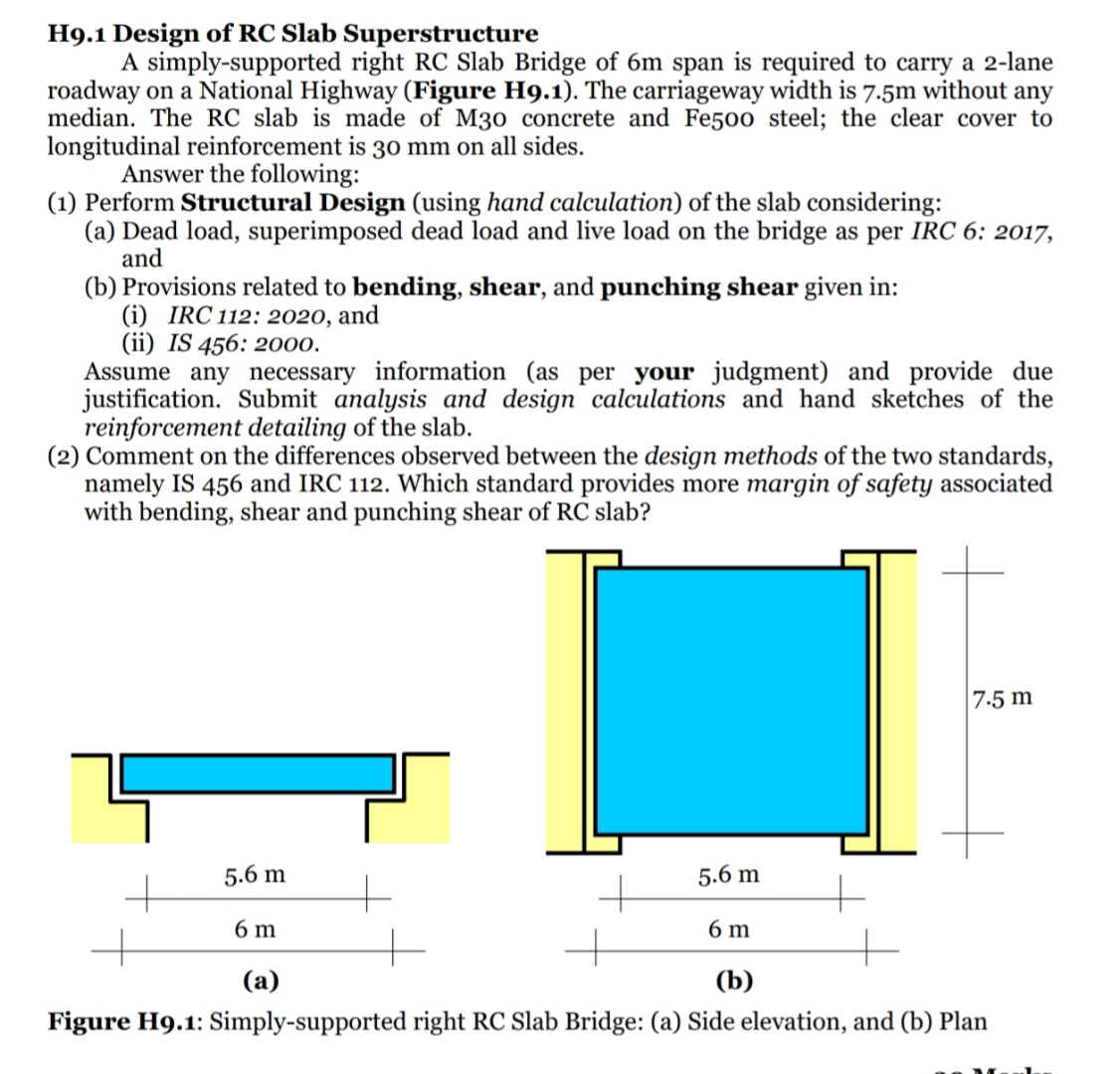
H9.1 Design of RC Slab Superstructure A simply-supported right RC Slab Bridge of 6 m span is required to carry a 2-lane roadway on a National Highway (Figure H9.1). The carriageway width is 7.5 m without any median. The RC slab is made of M30 concrete and Fe500 steel; the clear cover to longitudinal reinforcement is 30 mm on all sides. Answer the following: (1) Perform Structural Design (using hand calculation) of the slab considering: (a) Dead load, superimposed dead load and live load on the bridge as per IRC 6: 2017, and (b) Provisions related to bending, shear, and punching shear given in: (i) IRC 112: 2020, and (ii) IS 456: 2000 . Assume any necessary information (as per your judgment) and provide due justification. Submit analysis and design calculations and hand sketches of the reinforcement detailing of the slab. (2) Comment on the differences observed between the design methods of the two standards, namely IS 456 and IRC 112. Which standard provides more margin of safety associated with bending, shear and punching shear of RC slab? Figure H9.1: Simply-supported right RC Slab Bridge: (a) Side elevation, and (b) Plan